Service 3D Props & Environment Assets
Back to top

3D props and environment assets sets of objects to one scale and standard

Start a project

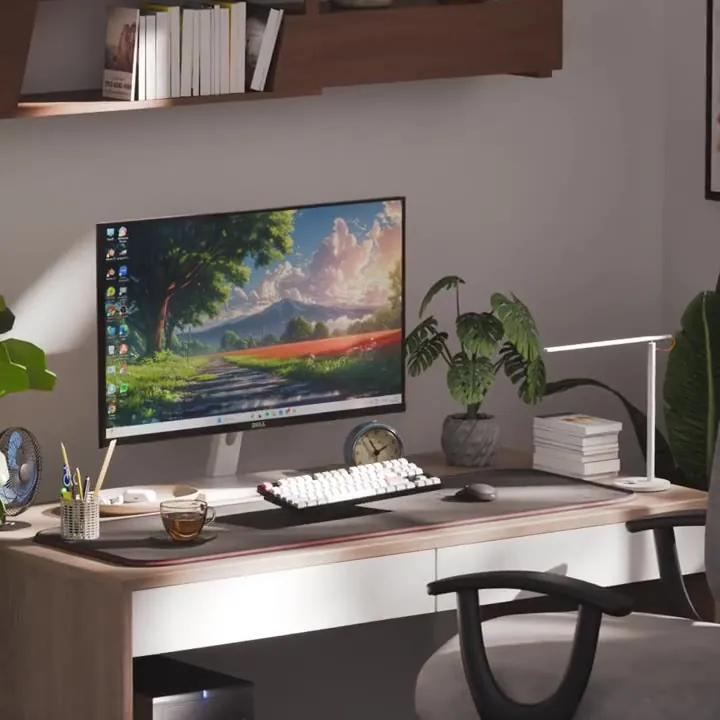
A scene is dressed with dozens of small objects. We build them as sets, to one scale, one texel density and one material standard, so nothing looks like it came from elsewhere.

Service

3D props are the objects that dress a scene: furniture, lamps, utensils, carts, poles, tanks and signs. We build environment asset sets for games and real-time scenes, planned together so every object shares a scale, a texture standard and a style.

A single prop is a small job. A set of forty is a planning job, and planning is where a set succeeds or fails. This page explains how we plan a set, what you send, how a set is quoted and how the Indian objects already in our library can shorten the list. Every library prop turns on the 3D modelling section, and the Indian 3D models page lists them by group.

What you get

  • 01

    Planned as a set

    We agree the object list, the scale, the triangle budget by size class and the texel density before the first model, so the set is consistent.

  • 02

    Modular where it helps

    Walls, railings, shelves and stalls built on a grid so your level team can repeat and combine them.

  • 03

    Variants for variety

    Colour, wear and arrangement variants of one object cost less than new shapes and stop a street looking copied.

  • 04

    LODs for every prop

    LOD1 and LOD2 reduced from each model, so a crowded scene stays within budget at distance.

  • 05

    Textures that match

    One texel density across the set, shared trim sheets where sensible, and the same material setup on every object.

  • 06

    Delivered in engine order

    Named and arranged to your conventions, with collision meshes on request, in FBX, with GLB and USDZ if needed.

Work like this

Objects the studio has modelled in detail for films. The library props turn on the models page.

3D product render of a phone on an orange set Product Image RendersHero stills & packaging visualisation

Why props are ordered as sets

Most of what a player sees in a room or a street is props. A level needs them in volume, and in-house artists are usually better spent on characters and hero assets. Ordering props one by one from different sources produces a scene where the chair is sharper than the table and the lamp is a different size from its shadow. A set planned together avoids that. Everything shares one scale, one texel density and one material setup, and the LODs switch at the same distances.

We build the set in a fixed order: the largest or most repeated objects first, so the level team can start placing them while the small objects follow.


What a set plan contains

Before modelling starts we write a one-page plan and you approve it. It settles the things that are expensive to change later.

  • The object list, grouped by size class: large, medium, small and clutter
  • A triangle budget for each size class and each LOD
  • Texel density, texture sizes and which objects share a trim sheet
  • The grid unit for modular pieces
  • Naming, pivot and forward-axis conventions from your project
  • Which objects get variants, and what kind
  • The order of delivery

Indian scenes from the library

Our library already holds 38 Indian props and furniture models across interiors, decor and pooja, kitchen, lighting, street and vehicles, and weddings and events. A Mumbai street, an Indian kitchen or a wedding mandap can be dressed largely from it, with the gaps filled by custom objects built to the same standard. Using the library shortens the custom list and keeps the set consistent, because new objects follow the same rules as the ones that exist.

How a prop set is quoted

A set is quoted as a set, with a price per object inside it that depends on the object's size class, its detail tier, texture resolution and number of LODs. Clutter objects are quick; a cart with a canopy, wheels and stacked goods is not. Variants are quoted below new objects. Library objects are quoted as library models. If the list grows during the project, new objects are added at the same per-class rates, so you can extend a set without re-quoting it.

The quote shows the list, the budgets, the maps, the LODs, the formats, the revision rounds and the schedule. Our cost guide explains how to compare two prop quotes.

Props for walkthroughs and AR, too

The same sets dress real-time architectural walkthroughs built in Unreal Engine, where a furnished Indian flat needs furniture, kitchenware and pooja objects that are light enough to run on a touchscreen. For AR and web, the Low tier of each prop is exported as GLB and USDZ. If your project is an interactive walkthrough, we can supply the props to the team building it, or build both.

How it runs

  1. 01

    Object list

    You send the scene brief, references and a first list of objects, or we draft the list from the brief.

  2. 02

    Set plan

    We write the one-page plan: budgets, texel density, grid, naming and order. You approve it.

  3. 03

    Large objects first

    The biggest and most repeated objects are modelled, textured and delivered so placement can begin.

  4. 04

    The rest, in batches

    Medium, small and clutter objects follow in batches, each checked against the plan.

  5. 05

    Set check

    The whole set is placed together in the engine and checked for scale, density and LOD switching.

Questions

How much do 3D props for games cost?

A set is quoted as a set, with a per-object price that depends on size class, detail tier, texture resolution and number of LODs. Clutter is quick, a loaded cart is not. Send the object list and the platform for a quote.

What is the difference between a prop and an environment asset?

A prop is a single object that dresses a scene, such as a lamp or a cart. Environment assets include props and the modular pieces a level is built from, such as walls, railings and stalls. We build both, and plan them together.

Can you match the art style of our existing level?

Yes, for props and hard-surface objects. Send a few finished assets and the style guide. We build one object in that style first and you approve it before the set continues.

Do the props come with LODs and collision?

Every prop comes with LOD1 and LOD2. Collision meshes are added on request, as simple shapes or as a reduced copy of the mesh, following your project's convention.

Do you have ready-made Indian props?

Yes. The library has 38 Indian props and furniture models: street and vehicle objects like an auto rickshaw and a chai tapri, kitchen objects like a matka and a pressure cooker, pooja items, lighting and wedding decor. They turn on the models page.

Can you make modular pieces on our grid?

Yes. Tell us the grid unit and the engine, and we build walls, floors, railings, shelves and stall pieces that snap together and repeat cleanly.

How do you keep forty props consistent?

With a plan agreed before modelling, with the studio's own tooling that applies the same scale, pivot, material and naming rules to every object, and with a hand check of each model against the plan and a final check of the whole set placed together.

Keep going

Get in touch

Send the scene brief and a first object list. We reply with a set plan, a quote per set and a schedule.

Clients

Developers, brands and studios we have made work for.

  • Piramal NextGen
  • Raymond
  • Clinique
  • Delta Corp
  • Gillette
  • Piramal Peninsula
  • JM Group
  • The G Story
  • Empire Living
  • Engage
  • Arch Sterix, Nigeria
  • The Croffle Guys
  • Bombay Design Lab
  • AND Design Co
  • QPC Group, Australia